Tampah
Reserve
Living Vision
An elemental sustainable land project. Where water heals, fire initiates, earth grounds, and wind expands.
Tampah Reserve started as a luxury villa development with wellness as a feature. It is becoming something else.
A globally significant regenerative wellness destination. Three signature elemental sanctuaries woven through one piece of Lombok coastline. Luxury residences fund and surround the consciousness work, but the consciousness work is the soul.
It merges Balinese spiritual tradition with Celtic / Avalon water wisdom, Sasak craftsmanship with safari-style wilderness immersion, ecological restoration with elevated tropical luxury.
The land has been speaking. Our job is to keep listening, then build what it asks for. Rachel · Tampah Hills, May 2026
This document is a living vision. It updates as the listening continues. Refresh anytime.
A creek descending one of the forest valleys, with natural stone dams creating a series of pools at every elevation. Spaces beside each pool to meditate, to float, to nap in a hammock, to picnic among fruit trees. A silent walking trail runs alongside. Blue lotus blooms at the base. Herbs grow along the banks.
Inspired by Tirta Empul and Balinese melukat, by the Chalice Well at Glastonbury, by Avalon mythology and the Celtic well maidens, by ferns and moss and dripping limestone.
Not a spa. Not a wellness facility. A place where grief softens, life force returns, and water remembers what modern life has made people forget.
Balinese. Holy springs, daily offerings, flower blessings, melukat purification. Anchored by a local practitioner. Honored, learned from, paid into. Never appropriated.
Celtic / Avalon. The well maidens, the priestesses of Avalon, the Chalice Well. The ancestral lineage many Western guests are quietly hungry for. Particularly resonant for Rachel, whose own roots trace to England, Ireland, France.
Both traditions hold the same truth: water is alive, water remembers, water blesses.
The spring becomes the meeting point between earth and sky.
The land already holds a spring. The vision: let it cascade down the natural valley with stone dams creating pools at every elevation, each pool offering its own invitation to slow down.
Volcanic stone. Limestone. Moss walls. Flowing water channels. Dark reflective pools. Aged timber. Bronze. Carved stone. Candlelight. The space should feel grown from the earth itself, not built on top of it.
Sound: muted. Birdsong, water, no human voices carrying. Light: dappled through canopy, never direct sun. Privacy: full visual separation from villas and paths. Transition: walked, never driven. Scale: human, intimate, never grand.
Ancient, feminine, grounded, elemental, timeless. Not polished luxury spa aesthetics. Sacred earth architecture. Hanging vines, ferns, water gardens, lotus pools, hidden alcoves, moss-covered walls.
The jaguar is never literal. No obvious branding. No themed motif. It appears subtly through carved patterns, stone textures, artwork, mythology in storytelling, stealth architecture, nocturnal atmosphere.
Guests feel it rather than see it.
The archetype becomes instinct, observation, silence, sovereignty, wild intelligence. Restraint is what makes it luxurious and powerful.
The land becomes the luxury. Not the architecture.
The arrival sequence matters. The road narrows. The jungle thickens. The air cools. Guests slowly leave behind noise, phones, roads, social energy. By the time they arrive, the city is gone from their bodies.
After dark, magic. Very low artificial light. Fire instead of floodlighting. Lantern pathways. Jungle sounds amplified. Guests whisper naturally.
Ancient wilderness elegance. Closer in feeling to African wilderness lodges and Aman-style restraint than to anything Bali currently offers.
Not "activities." Guided immersion into living ecosystems. The thing no other resort in Southeast Asia is doing at this scale.
Hidden stone lodges. Elevated timber pathways. Dark volcanic textures. Open-air bathing. Shadowed interiors. Low lighting. Structures embedded into terrain. Sasak craftsmanship throughout.
Do not overbuild. The power comes from emptiness, silence, scale of nature, subtlety. The retreat should feel protected by the land itself, not perched on it.
Not flashy eco-resort. Closer to African wilderness lodges, Aman-style restraint, sacred landscape sanctuaries. But uniquely Lombok. The buildings feel like they belong to the land.
Four days. Three nights. Eight men on the land. We set up camp under bamboo structures with stunning ocean views, watched the full moon rise, hiked the back of the property, held tea ceremony at sunrise, and gathered around the fire pit at night. We bathed in the spring creek. We slept in the carved-out camping zones beside the bamboo toilet and the hammock and the swing.
The land was already prepared. Bamboo, water, fire, fresh air, quiet. The men came in tired and city-bodied. They left more themselves.
This was not designed as a product. It was the land showing what it wants. The product is now obvious.
The land is calling it in. A women's rewilding retreat is on its way. A family wilderness retreat for January is already asking. The path is opening faster than we are walking it. Rachel Pascoe · co-founder · May 2026
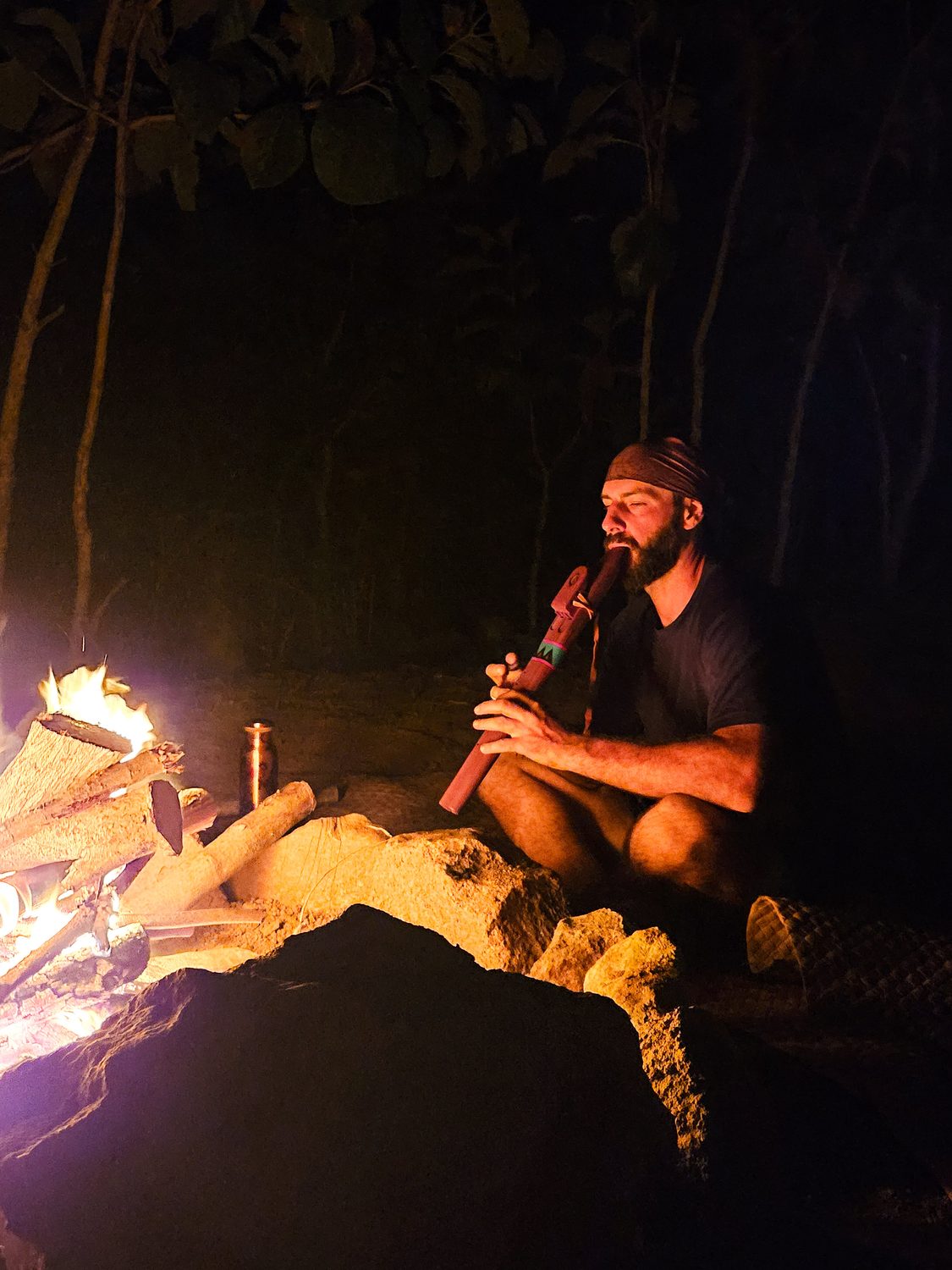
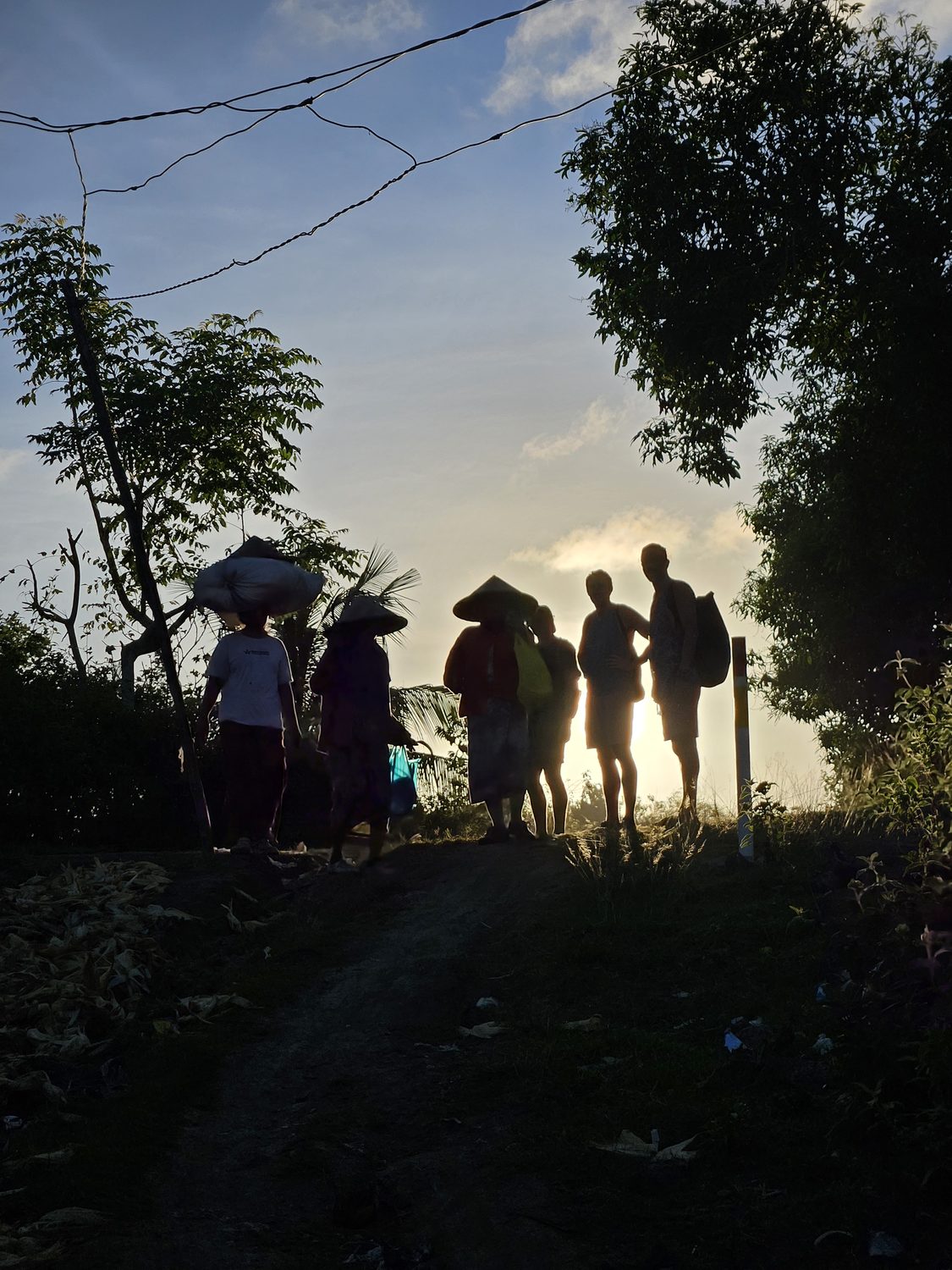
The original wilderness camp plan had two stages. Fix the existing camp first, with bedrolls and lanterns. Add safari tents later when the brand was ready. After sitting with the first retreat in May 2026, the read has changed.
The land is already calling retreats in. Three confirmed interests in less than two weeks. A women's rewilding container. A family wilderness retreat in January. The men returning for round two.
The thin camping mats were the only thing that broke the medicine. The bamboo structures held. The fire pit held. The spring held. What is missing is the comfort layer that lets a guest sleep, and lets a facilitator run a full container without burning out.
The new decision is to skip the half-measure. Go straight to premium safari-style tents now. Land six paid retreats this season. Use the revenue to fund what comes after.
This plan answers Q03 in our Living Vision with action this quarter, not next year.
Each tent holds two double beds. Push them apart for two travelers, push them together for a couple or a family with a little one. Sixteen sleeping arrangements across eight tents. One tent zone designed for any audience the land calls in.
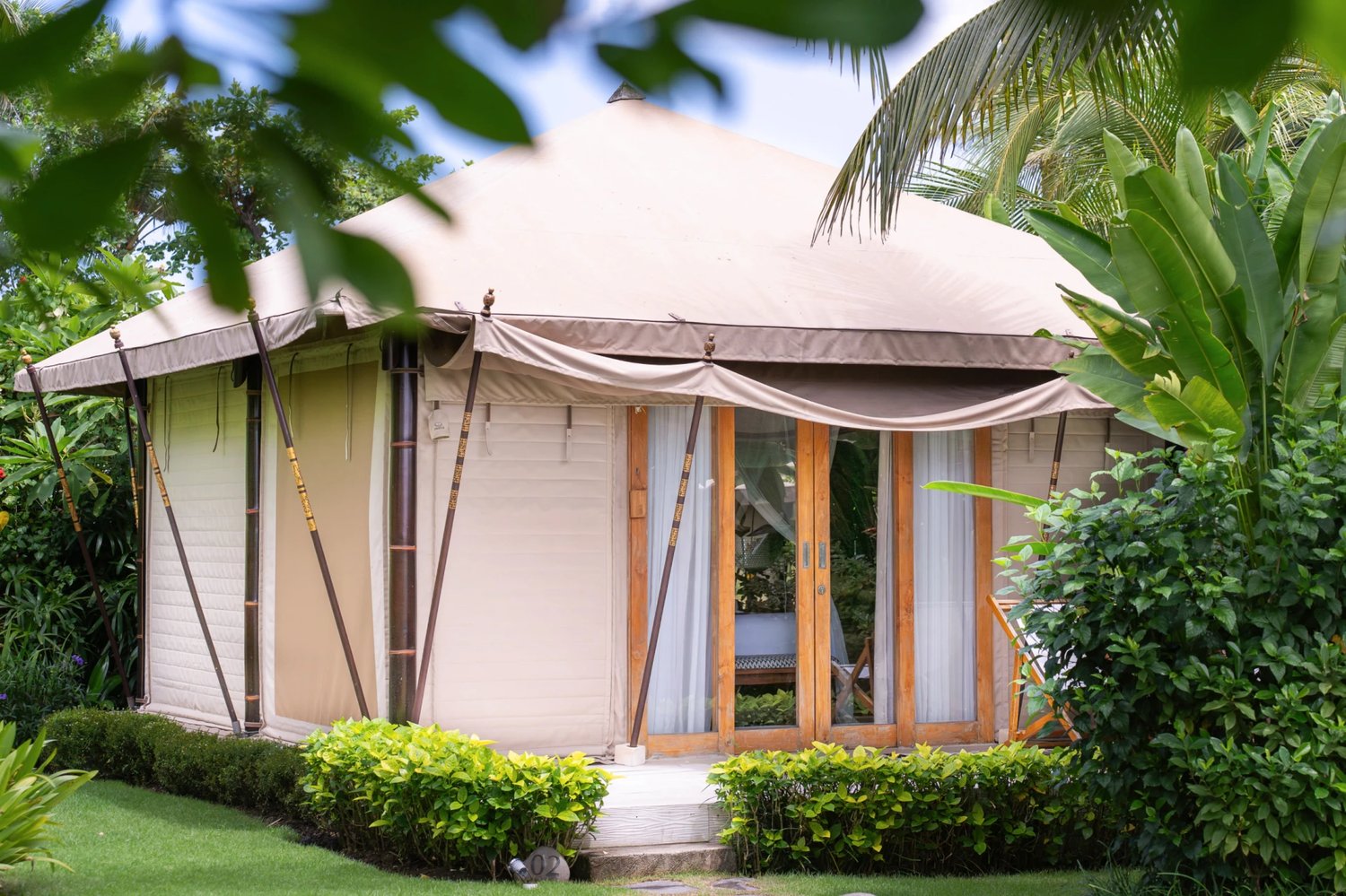
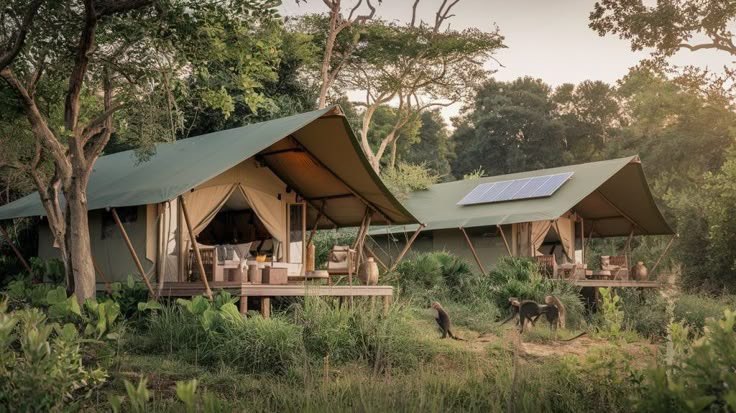
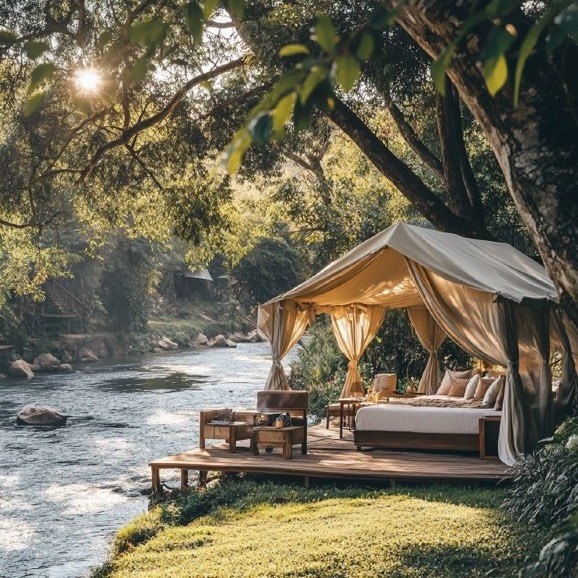
Reference image · premium safari-style canvas tent · for spec only
Permanent or semi-permanent safari lodge tent. Canvas roof and walls over a marine-coated galvanized steel frame. 30 to 45 sqm per tent. Two double beds, soft lighting, side tables, room to sit. Earth-tone canvas, brushed bronze hardware, no visible logos. Double-skinned, ripstop, 750+ GSM canvas, waterproof, UV-resistant.
Two Bali-based manufacturers stand out. Both produce in Indonesia, install in Bali and Lombok, and have worked on premium hospitality. Tier B is international, only called if Tier A cannot meet the timeline or design feel.
tap to see the shortlisttap to collapseSend the spec to Escape Nomade and Gudangtenda. Ask for: site visit within 30 days, written quote for 8 tents fully kitted, delivery and install timeline to Lombok, three Bali reference projects we can walk together.
Ken leads layout and construction on site, which drops decking, fit-out, and shared-infrastructure costs to local labor and materials only. Numbers below assume tents are bought factory direct and the rest of the camp is self-built. Working mid-point: USD 80,000.
tap to see the breakdowntap to collapse| Line | Low (USD) | High (USD) |
|---|---|---|
| Tent + frame + canvas (Gudangtenda base tier) | 3,500 | 6,500 |
| Timber deck + tie-down foundation (Ken's crew) | 600 | 1,200 |
| Two double beds + linens + side tables + lighting | 900 | 1,600 |
| Composting toilet + screened gravity shower (DIY) | 400 | 900 |
| Solar + USB + fan package | 350 | 700 |
| Per tent landed | 5,750 | 10,900 |
| Eight tents total | 46,000 | 87,200 |
| Bamboo ceremony pavilion (local crew + bamboo) | 2,000 | 4,000 |
| Camp kitchen (covered prep, fire pit, water store) | 1,500 | 3,500 |
| Communal bathhouse upgrade (if needed) | 1,500 | 3,500 |
| Path lighting, signage, fire ring, ceremony tools | 800 | 1,800 |
| First aid, sat messenger, guidebook print run | 800 | 1,500 |
| Shared infrastructure total | 6,600 | 14,300 |
| Phase One total (eight tents + shared) | 52,600 | 101,500 |
USD 2,000 per person × 16 guests = USD 32,000 per retreat gross. Six retreats year one = USD 192,000. Payback at mid-point budget lands inside the third retreat.
Rachel's friends from Tampah Hills want to come over for a 2 to 3 night retreat in July 2026. Tents take 11 to 14 weeks to manufacture and install. The supplier path lands the safari camp by late August at the earliest. So July needs a bridge plan. Two clean options.
tap to see option A vs Btap to collapseRapid order: 16 quilted bedrolls, sheepskin toppers, weighted blankets, lanterns, soft kitchen, screened bathhouse. Budget: USD 4,000 to 6,000. Lead time: 2 to 4 weeks. The camp runs as it ran in May, with the only thing that broke now fixed.
Pros: low cost, the medicine matches the season, fully in our control.
Cons: July is wet season tail in Lombok. Tarps and rain plans required.
A handful of Bali outfits rent premium glamping tents for events. Glamp Nusa and Bali Beach Glamping both do off-site setups. Budget: USD 8,000 to 14,000 for 8 tents over 3 nights including setup and teardown.
Pros: guests get the full feel of the future camp, brand story is consistent.
Cons: higher cost, logistics of getting tents to Lombok and back, dependent on rental availability.
Lean Option A. The first paid retreat should match the spirit of the first held retreat. Bamboo, fire, spring, listening. Add sleep, hold the rest. Use the savings to pay Sasak elders well and to lock the tent contract the same week.
Targets for the first 12 months. Each is a real container that has already signaled interest, or has high probability based on the network. Six fills the calendar. Eight gives margin.
tap to see the calendartap to collapseThree roles, three responsibilities. Clear sign-off at each gate so nothing waits and nothing gets stuck.
tap to see who does whattap to collapseMakes the call on aesthetic and supplier feel. Walks at least one reference site. Signs the supplier contract once price, spec, and design feel are aligned. Holds the brand's energetic integrity.
Owns the on-land layout walk-through, deck construction, shared-infrastructure builds, and contractor coordination. Manages local crews for bamboo pavilion, kitchen, bathhouse, path lighting. Confirms permitting for semi-permanent structures.
Writes the spec, runs supplier conversations, designs the camp guidebook, holds the men's containers, brings facilitator partners, runs the brand story alongside the build.
Rachel and James each bring their circles. Women's retreats from Rachel's priestess and rewilding network. Men's work, vision quest, and rite-of-passage facilitators from James's network. Family and couples work co-curated. Sasak elders invited as paid guests on at least one retreat per quarter.
James leads the network build over the first three months. Names go on a shared list. Each facilitator gets the camp guidebook, a paid trial weekend, and a clear revenue share before holding paying guests.
These are the gates that unblock everything else. Once they are answered, supplier outreach begins the same day.
tap to see the six gatestap to collapseComfortable with USD 80k mid-point on Phase One? Or do we phase the install (4 tents now, 4 in six months)?
Founder capital, Rachel and Ken pool, retreat pre-sales to underwrite, outside check, or a mix?
Rachel walks Escape Nomade and Gudangtenda reference sites within 30 days. Rachel makes the design feel call. Rachel signs.
The bamboo zone near the spring as the permanent camp, or walk the land together to choose? Lock before supplier site visit.
Option A (upgrade current camp, USD 4-6k) or Option B (rent premium tents, USD 8-14k)?
Rachel sends her trusted circle. James reaches out and holds the building of the network.
Week 1 budget + zone lock. Week 2 vendor walks. Week 3 contract signed and deposit paid. July soft-launch retreat with sleep upgrade. Mid August safari tents land. September men's Wild Lands on the finished camp.
The architectural Wild Lands Retreat is years out. Hidden stone lodges. Open-air bathing. The wildlife reserve pressing in behind. The safari camp and the first six retreats are not detours. They are the rehearsal that earns the right to build the permanent sanctuary well.
read the fire vision →The land has been speaking. It is now asking us to build the container that lets the medicine repeat. Eight tents. A pavilion. A kitchen. A few well-chosen Sasak partnerships. Enough comfort that guests sleep well. Enough wildness that they leave more themselves.
This funds itself within a year if the retreats land. It builds the brand story the architectural Wild Lands Retreat will sit on. Ready when you are.
Most resorts design around views, pools, interiors. This resort designs around airflow, sound, shifting light, the movement of fabric and trees. Guests constantly feel nature moving through the resort.
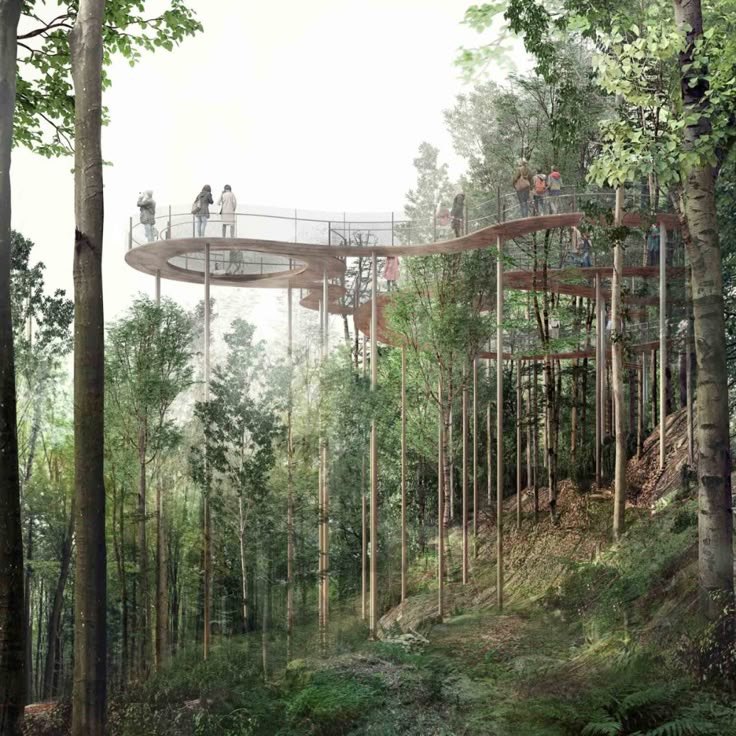
Buildings feel aerodynamic, floating, gliding, weightless. Long rooflines extending like wings. Cantilevered cliff pavilions. Elevated pathways. Suspended platforms. Layered viewing decks.
Eagle energy in architecture, not as decoration.
Wind chimes tuned architecturally. Bamboo resonance. Airflow through stone corridors. Open pavilions amplifying breeze. Subtle, never intrusive.
Light designed around sunrise, sunset, moonlight, shadow movement. Architecture as a tool for observing time and atmosphere.
Space itself becomes the luxury. The wind. The silence. The horizon.
Pale limestone. Weathered timber. Brushed bronze. Soft sand plaster. Natural linen. Volcanic stone accents.
Cloud white. Dune. Sky grey. Faded bronze. Ocean blue reflections.
Inspired by Pablo Luna, organic-modern cliffside architecture, Aman simplicity.
Where the Water sanctuary works with grief and the Fire retreat works with instinct, Wind works with breath, vision, and future.
Practices: breathwork, aerial yoga, movement, meditation, creative clarity sessions, leadership retreats, fasting and reset experiences.
The atmosphere itself creates mental spaciousness, future thinking, emotional perspective.
The valley between Tampah Hills and Tampah Reserve has no ocean view, which has meant it has been undervalued in earlier master planning. That undervaluation is now the opportunity.
The river runs through it. The valley floor opens wide and flat. The trees on either side rise into the hills that hold the Reserve. This is where the slow work happens. The grounding. The eating. The walking. The remembering of how to live in relationship with land.
An edible food forest where guests pick and eat as they walk. A walking trail through botanical gardens, herb beds, jamu, ginger, lemongrass. A horse trail following the river. Picnic clearings under fruit trees. A stone labyrinth for walking meditation.
Sasak knowledge holders invited as paid teachers. Local farmers contracted for the food forest. Regenerative principles in every soil decision.
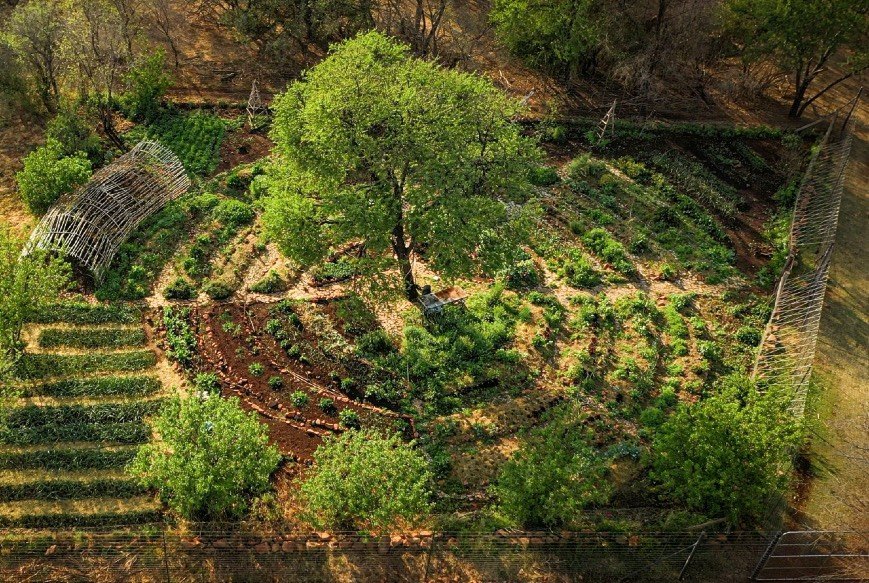
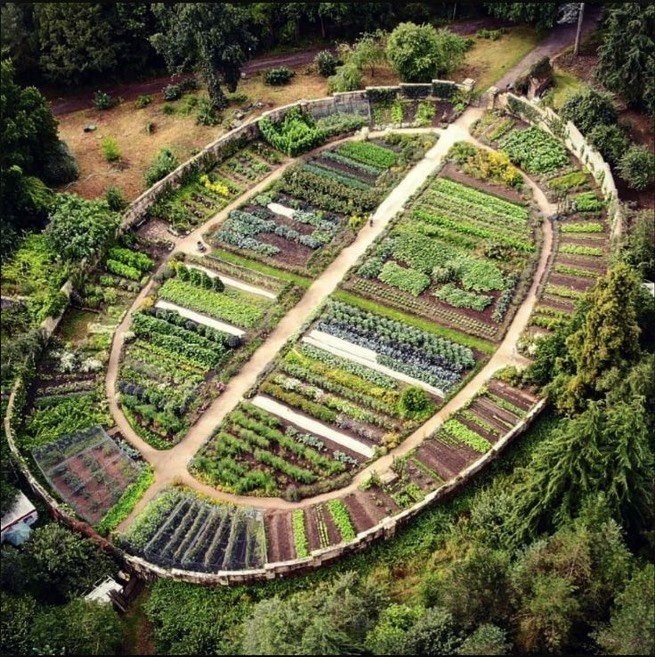
A circular walking labyrinth at the heart of the valley floor, set inside a ring of herbal medicinal gardens. Walk slowly to the center stone. Sit. Walk slowly out. Held in silence. Surrounded by lavender, rosemary, sage, ginger, and the herbs Sasak elders bring from the village.
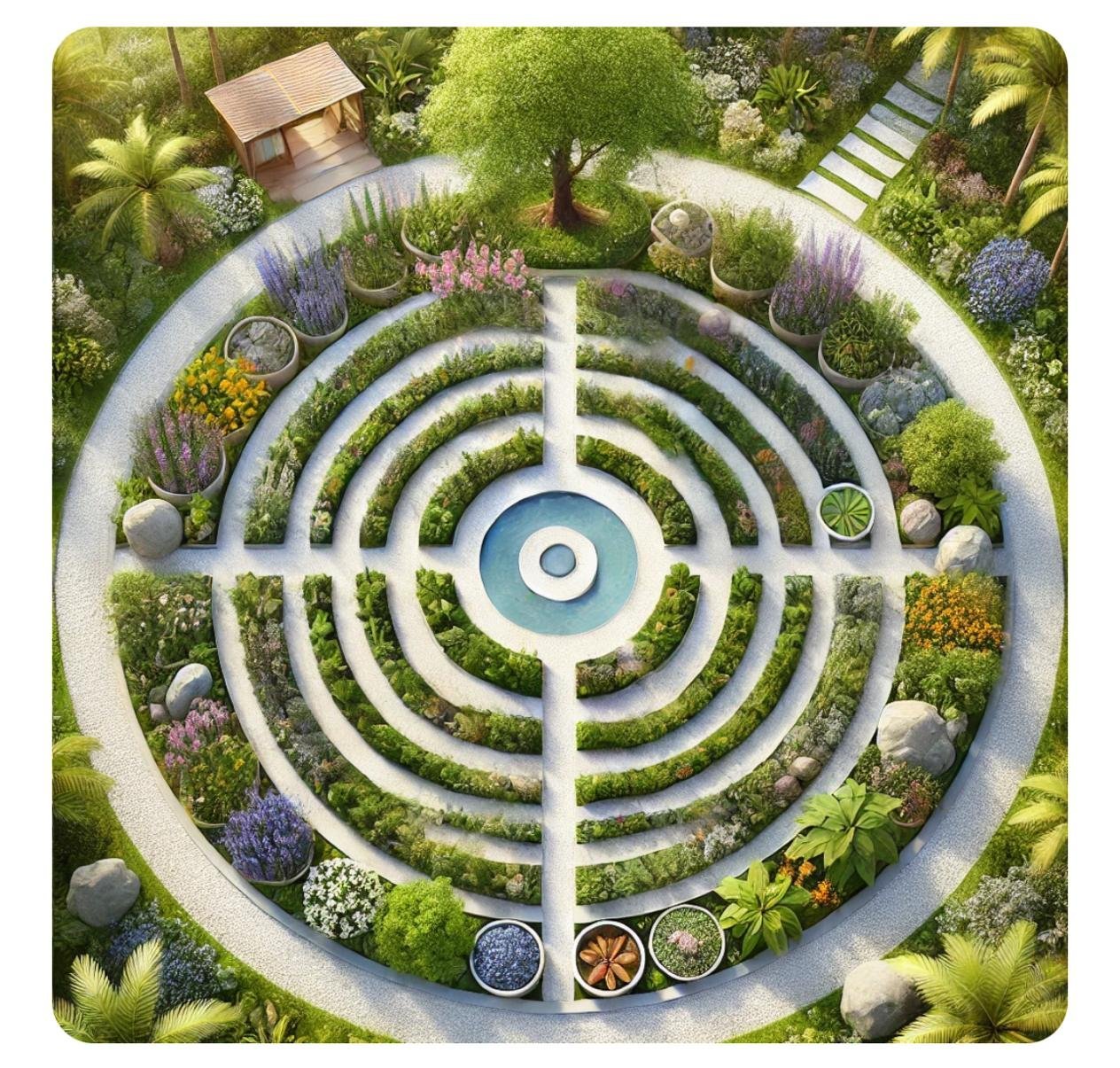
Reference image · aerial concept of the labyrinth + herbal medicinal garden
The front of Tampah Reserve faces the ocean. The back of the project faces the volcano. The middle holds the school, the families, the spring, the camp. The wilderness holds the rest — depth, mystery, exploration, and ecological significance.
No other Lombok project has this gradient on a single property. Aman competes on coastline. Nihi Sumba competes on coastline. Tampah Reserve competes on coastline and mountain and wilderness corridor.
This is the move that turns Tampah Reserve from a beautiful seaside development into one of Indonesia's leading regenerative eco-tourism and conservation destinations.
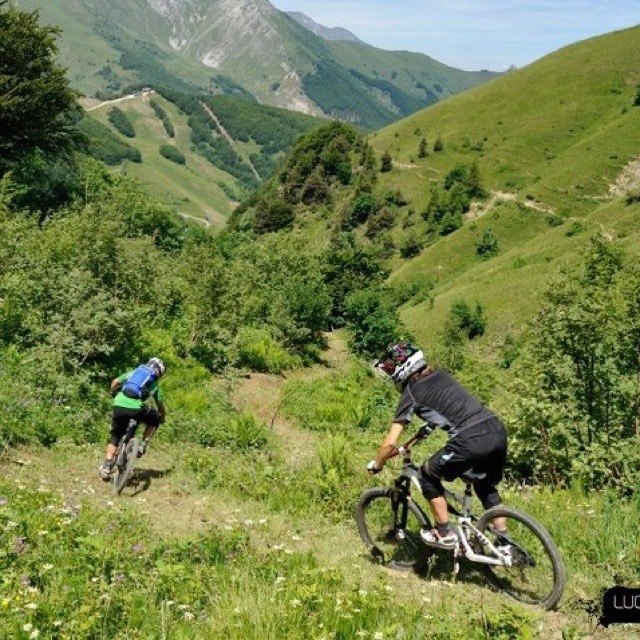
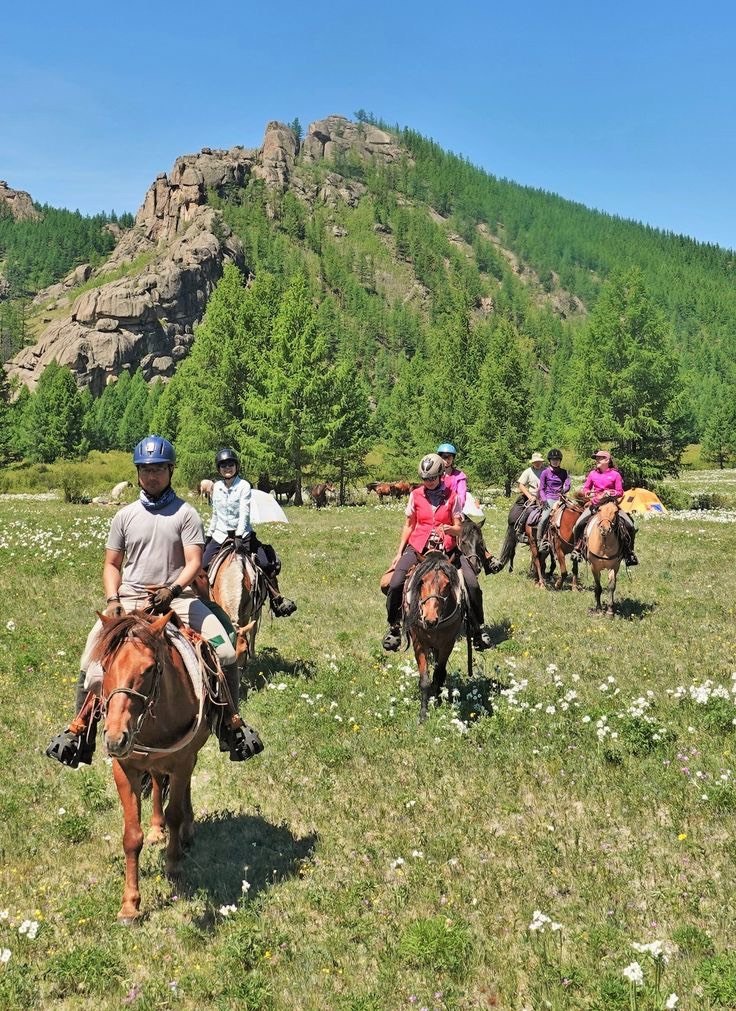
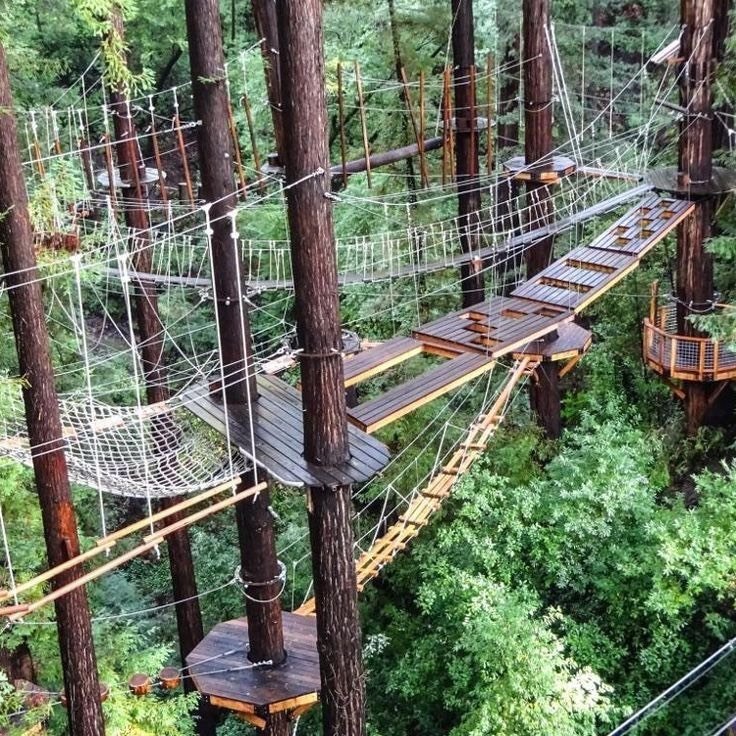
Reforestation. Native tree planting. Wildlife habitat restoration. Water retention. Soil regeneration. Permaculture and agroforestry design. Measurable biodiversity uplift.
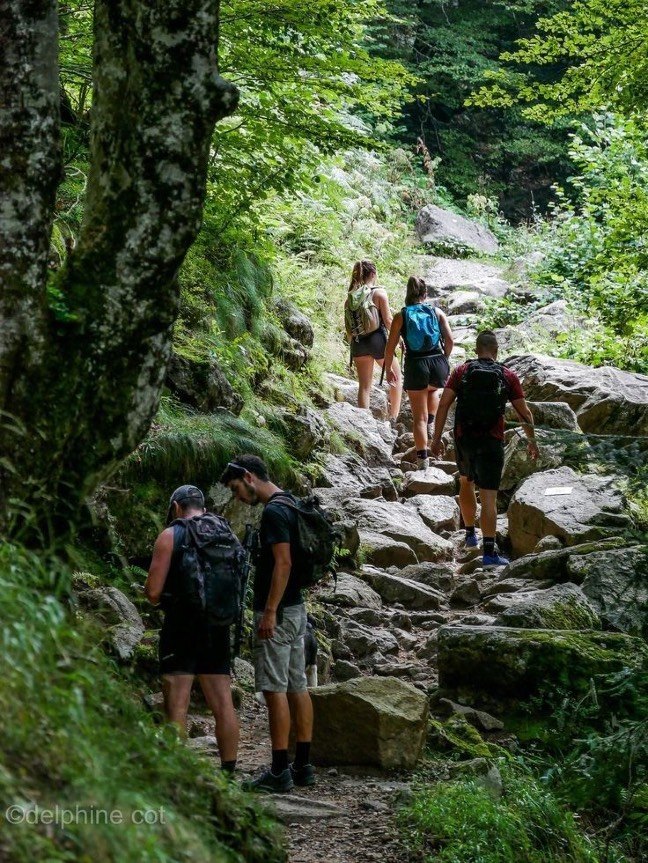
Guided jungle walks. Sunrise volcano viewpoints. Mountain biking trails. Horse trekking. Wilderness camping. Forest bathing. Wildlife observation hides. Night walks. Survival workshops.
Low-impact accommodation hidden inside the forest. Safari tents. Elevated jungle villas. Treehouse suites. Forest wellness cabins. Bamboo, stone, reclaimed timber, passive cooling, solar.
Vanilla, cacao, coffee, cinnamon, clove, nutmeg, pepper, turmeric, ginger under forest canopy. Orchards of mango, avocado, coconut, papaya, jackfruit, soursop, citrus. Feeding retreat kitchens, juice bars, wellness products.
Dedicated areas grow jute and natural fibres. Eco bags, textiles, retreat uniforms, rope, packaging, artisan goods. A future Tampah Reserve Earth Collection sold internationally.
A protected habitat for native South Lombok wildlife. Future partnerships with universities, conservation NGOs, wildlife researchers, eco-education programs. International environmental credibility.
Forest meditation trails. Elevated canopy walks. Educational ecology paths. Waterfall trails. Volcano viewing decks. Family discovery trails. Bamboo pavilions and viewing platforms.
Digital detox. Breathwork. Wilderness immersion. Leadership retreats. Regenerative living workshops. Yoga in nature. Family reconnection. Permaculture education. An international destination for reconnection.
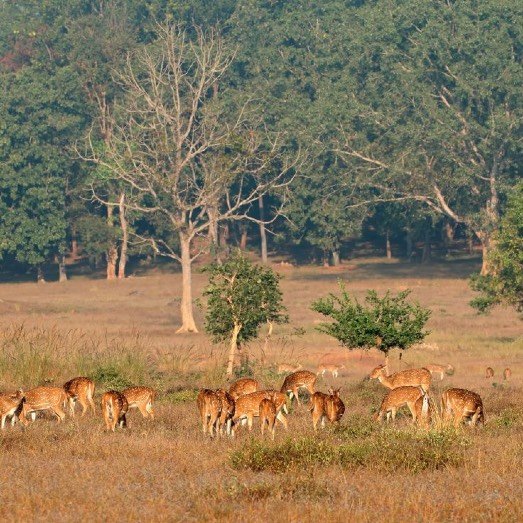
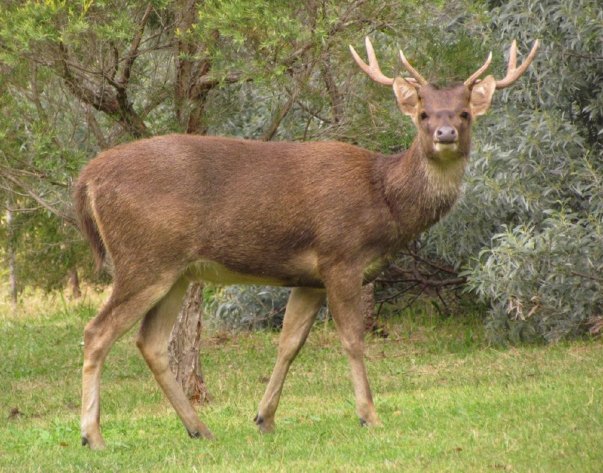
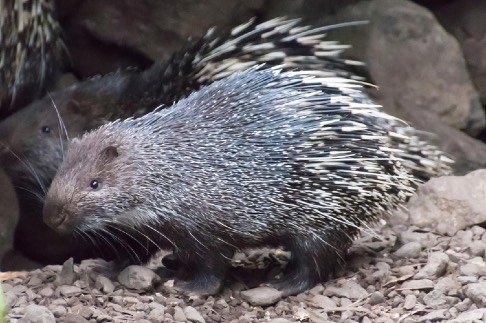
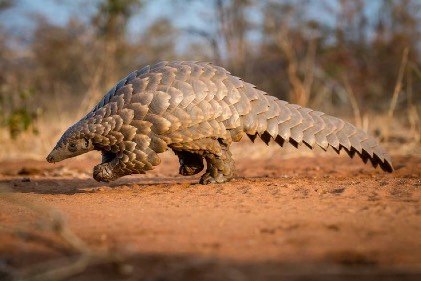
South Lombok's endangered animals, several of which have already been seen on Tampah land. The wilderness zone becomes their protected corridor and the foundation of an international conservation story.

The wilderness is not a cost center. Five overlapping streams let the land fund its own regeneration and contribute to the project economy alongside the villa sales.
Luxury accommodation, guided experiences, retreat programs, eco-tourism activities.
Organic produce, tropical crops, coffee and cacao, jute fibre products.
Permaculture training, eco-school partnerships, conservation workshops.
Retreat hosting, healing programs, corporate wellness experiences.
Natural products, organic skincare, artisan goods, farm products.
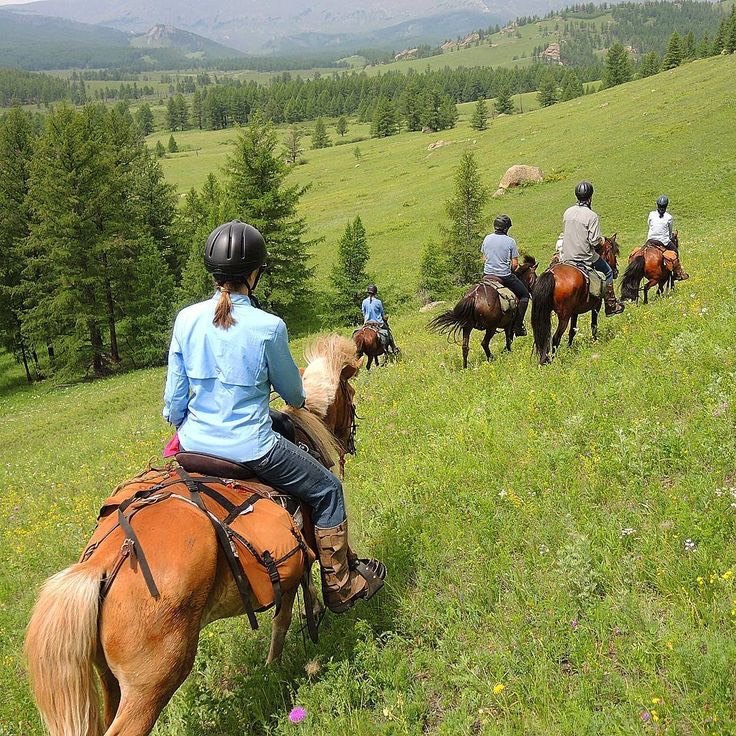
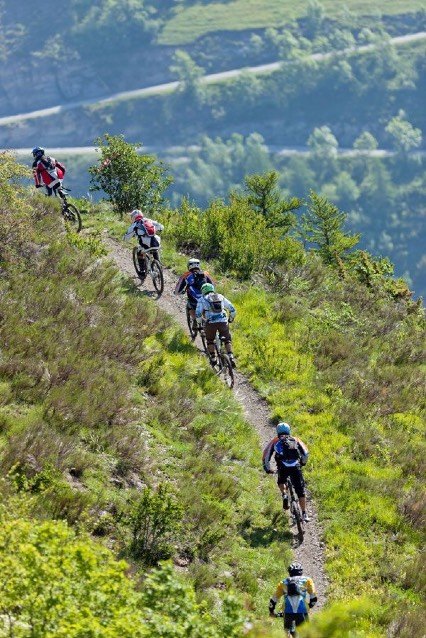
Tampah Reserve runs from the ocean to the volcano. 180 hectares of ocean-view villas, sacred spring, family hearth, school, wilderness camp, and 100 hectares of regenerating native forest climbing toward Mount Rinjani. A protected biodiversity corridor that doubles as the most extraordinary backyard a child could grow up inside.
What's the structure, what's the funding, what's the close date? This determines when the wilderness pillars become real and how the buyer story changes.
Before the master plan locks. What's already named, what's already protocol-protected, where the wildlife corridors run, where the forest doesn't want a trail.
Biodiversity, soil, water, wildlife counts. Year 1 establishes the data. Years 3, 5, 10 are the brand's evidence base. The numbers are the regeneration story.
From Rachel's WhatsApp, May 18: "At the core of Tampah Reserve is not finance, but frequency. Not extraction, but relationship. Not ownership, but stewardship. The vision has been shaped through listening — to the waters, the trees, the rhythms of the earth, and the unseen intelligence that moves through nature. It is a place held through intuition, prayer, creativity, and deep service to life itself."
She also corrected an assumption in the 8-lens output: the school is not internal to Tampah Reserve. 40 are have been leased to Anak Alam School Lombok, an independent nature-based school. TR honors and protects this relationship rather than building school infrastructure inside the project.
And she named her clearest yes: "I like the sasak wisdom keeper lenses. As feel land has wisdom to offer." The Sasak lens becomes the spine of the project. The other seven lenses stand on it.
None of these were in the 8-lens output. Rachel introduced all three in her May 18 response. They become the project's signature programs.
An open-air Sasak pavilion, woven into the landscape, overlooking medicinal gardens and buffalo fields. Shoes off. Phones away. A host serves herbal teas grown on the land — ginger, turmeric, lemongrass, betel leaf, moringa, tamarind. Conversation unfolds slowly. No rush.
This is not "doing wellness." It is entering regulation — with the nervous system, the breath, the body, the rhythms of nature, the slower frequency of the land, authentic human connection.
In traditional Sasak culture, buffalo symbolized grounded abundance — fertility, agricultural strength, stable family, continuity of ancestral ways. The opposite of speed-and-accumulation wealth.
Guests are welcomed onto a berugak overlooking open grazing lands. Tea is prepared slowly. Buffalo move quietly through the fields nearby. Living symbols of calm strength. Not spectacle. Presence.
The Sasak feminine has always carried herbal medicine, weaving, water, postpartum healing, grief work, oral tradition. A quieter form of wisdom than ceremonial-public power. Woven through TR as: healing spring waters, herbal medicine gardens, weaving circles, tea ceremonies, slow communal cooking, moon gatherings, postpartum spaces, mother-child spaces, feminine leadership retreats.
Most Western luxury wellness brands operating in Indonesia draw from Balinese vocabulary. Lombok is not Bali. Rachel's clearest strategic clarification: the brand needs to know the difference, and choose Lombok.
"Tampah Reserve could therefore carry a quieter kind of luxury: not excess, spectacle, or performance — but depth, stillness, earth connection, authenticity, and presence."
Tampah Reserve feels like an opportunity for a kind of soul rewilding.
Shoes off. Feet on the earth. Phones down. Tea shared slowly. Buffalo moving through the fields. Medicinal plants growing from the soil. Stories around fire. Space to rest. Space to create. Space to feel again.
Not escaping life — but returning to it.
"Tampah Reserve honours the wisdom carried by the Sasak people and the ancestral relationship between humans and the living earth."
"Here, plants are not simply resources, but teachers. Water is not merely consumed, but revered. Healing is understood as a restoration of relationship — with self, community, spirit, and nature."
"Through herbal medicine, regenerative farming, ceremony, storytelling, and deep listening to the land, Tampah Reserve seeks to protect and celebrate the ancient knowledge systems that have long understood what modern society has forgotten: that the earth itself holds intelligence, balance, and medicine for those willing to listen."
The land becomes teacher, ceremony, and medicine.
The design lens for the villa itself. What materials, light, air, water, and acoustics make a home actively restorative rather than merely beautiful. The home as nervous-system architecture.
Where does morning light fall on the bed? What does the floor feel like to bare feet? What sounds carry between rooms? Where is the cold plunge? Where does the family eat? Where does grief have a place?
What daily and weekly patterns of life turn a collection of villas into a living community. Third places. Shared meals. The Daily Path. The named spots where life happens between scheduled events.
Where do strangers become friends? Where do families overlap? Where do children meet other children? What is the rhythm of the week? Where does the community gather without it being an event?
What container holds the full arc of life across decades. Rites of passage. The seven stages. The places where weddings, baby blessings, milestone birthdays, eldership recognitions, memorials happen.
What does the project hold when someone is born here? When someone is grieving? When a child becomes a teenager? When an elder is dying? The arc is what makes this multi-generational rather than transactional.
The design lens that takes children seriously as residents. Not amenities for children, but a property built for them as full citizens at every age — toddler, child, teenager, young adult.
Where does an 8-year-old walk to Anak Alam, the adjacent nature school? Where do teenagers gather away from parents? Where do families eat together? Where is the labyrinth that holds a 13-year-old's rite of passage tree? The Wednesday-in-2030 vignette comes from this lens.
Elevated from one-of-eight to first among equals after Rachel's May 18 response: "I like the sasak wisdom keeper lenses. As feel land has wisdom to offer." This is the worldview TR is built inside of, not a relationship-with-other.
The Sasak land calendar. Sasak names for every zone. Ancestral protocols around the spring. The wider elder council, not just Dewi alone. The Wetu Telu tradition that sees life as alive with spirit. The feminine wisdom keepers tending herbal medicine, weaving, water, postpartum care, grief work, moon gatherings.
What's already protected? Which days are not for opening? Where can a foreigner go and where can they not? Whose grandmothers carry which medicine knowledge? What's the Sasak name of this plot? What percentage of revenue flows back into Sasak community ownership? When the lenses disagree, who has the priority vote? — this one.
The Aman / Nihi Sumba / Six Senses tier operator's eye. The arrival sequence. The first 24 hours. Service rituals. Staff training. SOPs. The back of house. The CRM. The Sovereign buyer reads operations before they buy.
What's the welcome ritual? Who hires the staff? Where do staff live? What's the SOP for a snake bite? What's the recovery script when something goes wrong? Without these answers, the beautiful vision doesn't survive contact with guests.
The systems lens. Every drop of water mapped. Every kilowatt of energy accounted for. The food forest cycle. The compost loop. The animal cycle. Soil indices tracked. Native species reintroduction targets. Carbon math.
Where does each drop of water come from and go? What does the food forest produce in October? What happens if the grid fails for 72 hours? What's the 30-year flow? The regeneration story has to be evidenced or it's decoration.
This lens now applies to the partnership with Anak Alam School Lombok, the adjacent nature-based school operating on 40 are next door. TR does not build a school. TR designs the land relationship that lets Anak Alam's pedagogy meet our forests, springs, food forest, wilderness, and Sasak knowledge holders.
Where does Anak Alam have standing land access? What protocols hold that access? Where do their children encounter Sasak elders on the land? Where do they meet the food forest, the spring, the wilderness as living classroom? The partnership is the design object, not the school itself.
When the wellness architect, the community designer, the family architect, the conscious community architect, the Sasak elder, the hospitality GM, the permaculture designer, and the Reggio pedagogue all converge on the same move, that move is right.
tap to see the six agreementstap to collapseThese are tensions worth holding, not solving. Each requires an explicit design conversation rather than being resolved by default.
tap to see the six tensionstap to collapseIf you sat down tomorrow, three things to lead with. These three asks, done together, take the project from a beautiful vision into a buildable, durable, multi-generational place.
tap to see the three askstap to collapseTampah Reserve is not finance, but frequency. Not extraction, but relationship. Not ownership, but stewardship. Where the Sasak relationship is the spine of the project — with a room, a structural place in the economy, a Berugak Tea Ceremony as our signature wellness offering, and the buffalo moving through the fields as living symbols of grounded abundance. Where Anak Alam School Lombok, the adjacent nature-based school, is held as a sister-partner — children walk to a school we do not own, on land we steward together. brand sentence · revised may 18 2026 · voice rooted in rachel's may 18 articulation
Return to Self.
Guests arrive to slow down, cleanse, heal, reconnect. Nervous-system restoration. Water blessings. Yoga and meditation. Detox therapies. Emotional release. Deep rest.
Awaken the Wild.
Guests move into wilderness immersion. Fire ceremonies. Adventure. Wildlife observation. Vision quests. Courage and leadership work. Reconnection to instinct and vitality.
Walk the Living Land.
Guests step into regeneration and reconnection. The river. The food forest. Horseback along the trail. Walking meditation in the stone labyrinth. Picnic under fruit trees. Earth practices guided by Sasak elders.
Rise Into Vision.
Guests elevate into clarity. Creative expansion. Visioning workshops. Leadership immersion. Breathwork. Sunset ceremony. Future planning. Inspired re-entry into the world they came from.
Tampah Reserve serves a specific kind of person, and refuses to serve everyone else. The audience defines the brand more than the brand defines the audience.
Not party tourism. Not influencer wellness culture. Not anyone seeking distraction.
Birthday, prior retreat history, intentions, chronic patterns. The AI builds a recommended path before the guest sets foot on the land.
Suggests the next zone, the next facilitator, the next practice based on what's emerging. Stays out of the way until called.
Reminds the guest of the practice from their human design session. Holds the thread until they return. Built to amplify human facilitation, not replace it.
Each function is a circle: visionary, construction, master planning, operations, sales, retreats, hospitality. Each circle has a lead responsible for execution. Anyone on the team can sit in on any circle to feel the pulse without having to hold it.
No top-down. No fixed reporting lines. Full ecosystem.
A team session for Rachel, Ken, Adrian, Anders, James. So everyone knows each other's wiring and stops accidentally pushing people into their shadow. Knowing how each person operates lets us put them where they thrive.
Scheduled for Month 1.
Ken is a co-founder. He holds Phase 01 sustainable homes and the construction lineage from the original founding vision. He also holds something rarer and more important: the relationship.
The deepest relationship on this project is with the Sasak people of Lombok. They are the original people of this land. Their cosmology, their animism, their shamanic traditions, their knowledge of soil and season and ceremony are part of why the land already feels alive. We are not building on top of their world. We are being invited into it.
Ken is the connective tissue to that world. He has been here long enough to be trusted. He sits with elders. He listens before he speaks. He brings Sasak knowledge holders into every aspect of the project as paid teachers and partners, never as decoration. Without Ken, the cultural integrity collapses and Tampah Reserve becomes another foreigner-led resort. With him, it stays what it is meant to be: a regenerative project rooted in respect for the people who have always lived here.
Every elemental sanctuary, every fire ceremony, every signature experience is shaped by what we are learning from the Sasak. Ken is how that stays true.
Foundation documents complete. This site replaces the static PDF. Updated as we iterate.
Source quilted bedrolls, sheepskins, lanterns, kitchen tubs. Set up storage tubs on the land. Print v1 of the camp guidebook so any facilitator can run a retreat from the same shared protocol.
Walk the Water and Fire zones with you. Begin Fire Zone v1 brief. First moodboard pulls for Water and Fire.
Walk the river valley. Start the food forest concept. First mapping of facilitator candidates per zone.
Site updated to v1.5 with all zones at parity. Ready for With Grace to receive.
With Grace receives full elemental briefs. First pilot retreat scheduled at Tampah Hills. Public-facing site begins (this internal version stays internal).